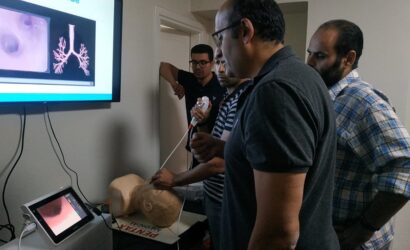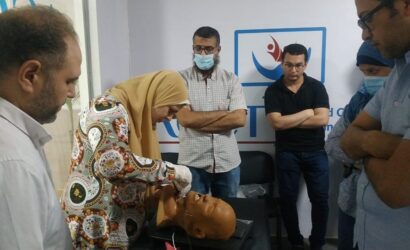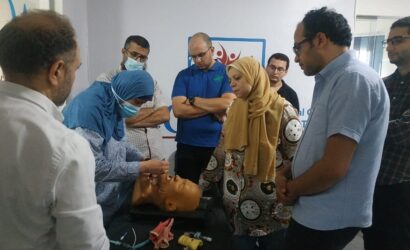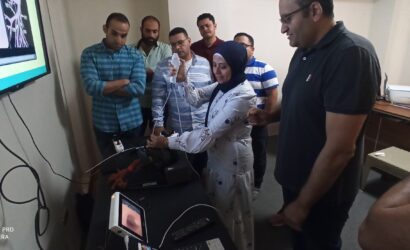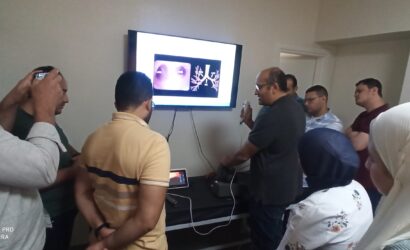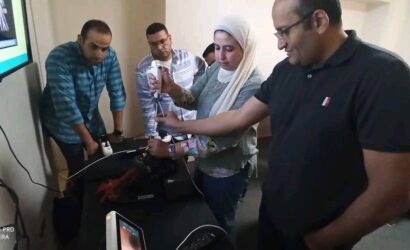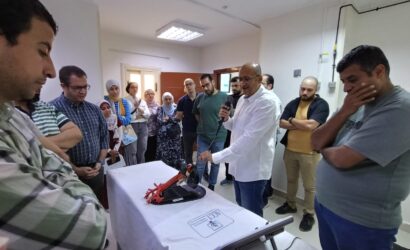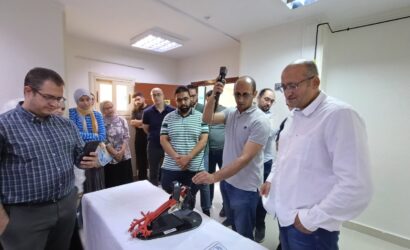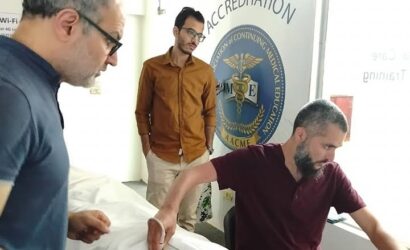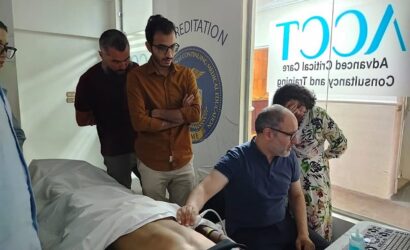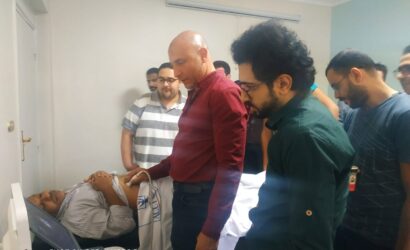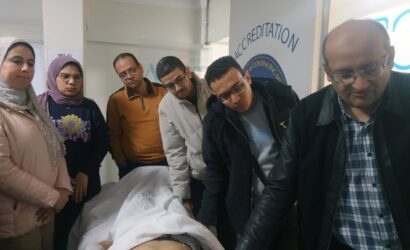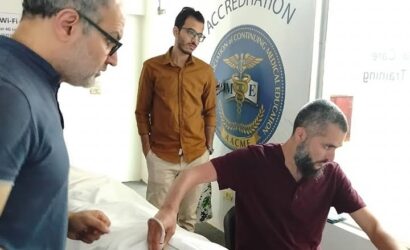
Bronchoscopy, Percutaneous tracheostomy and airway ultrasound: 17/7/2026
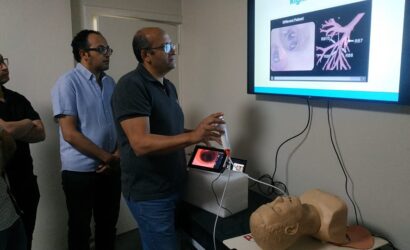
By the end of this course, the participant will be able to
• Understand the anatomy of basic bronchial tree
• Recognize how to obtain identify the structure of bronchial tree using bronchoscopy
• Understand the anatomy of airway and trachea
• Develop the skill of performing percutaneous tracheotomy
Topic
• Introduction to bronchial anatomy
• Hands-on bronchoscopy
• Introduction to airway anatomy
• Hands-on airway ultrasound
• Hands-on percutaneous tracheostomy
Participants
0
By the end of this course, the participant will be able to
 
  • Understanding basic Lung Mechanics
  • Modes of mechanical ventilation
  • How to set ventilator parameters
  • Ventilator Graphics and patient ventilator synchrony
  • Mechanical ventilation for ARDS
  • Mechanical ventilation for COPD
  • Mechanical ventilation in special population
  • Basics of sedation and sedation assessment during mechanical ventilation
  • Weaning from mechanical ventilation
  • Diaphragmatic ultrasound
Participants
0
By the end of this course, the participant will be able to
 
  • Ultrasound guided Regional Blocks:
    Upper Limb (Brachial plexus, Median, Ulnar, Radial and Musculocutaneous nerves)
  • Trunk (TAP, Quadratus Lamborum, PECS block, Serratus, Erector spinae plane, Pecto-intercostal)
  • Lower Limb (Lumbar plexus, Femoral, Lateral femoral Cutaneous, Obturator, Sciatic, Popliteal, ankle block, PENG block)
  • Ultrasound guided spine interventions:
    Cervical region (Roots, Facet joints, medial branches, Greater occipital nerve, third occipital nerve, Stellate ganglion)
  • Thoracic region (Paravertebral, Intercostal nerves, assisted epidural)
  • Lumbar region (Lumbar facet Joints, Sacroiliac joint, Caudal epidural, Lumbar epidural, pyriformis muscle)
Participants
0
By the end of this course, the participant will be able to
 
  • Understand the physics of ultrasound
  • Understand how to obtain basic cardiac echo views
  • Understand how to assess left and right cardiac function
  • Understand the basic concept of lung ultrasound
  • Understand different assessment protocols of respiratory and circulatory failure
  • Understand how to assess diaphragmatic function with ultrasound
Participants
0
By the end of this course, the participant will be able to
 
  • Airway ultrasound
    1. Airway Anatomy
    2. Sonography Anatomy & Characteristics
    3. Transducer Selection & Settings
    4. Ergonomic Considerations
    5. Patient Positioning
  • Lung ultrasound
    1. Lung ultrasound diagnosis
    2. Diaphragmatic ultrasound assessment
  • E-FAST
    1. Evaluation of Trauma Patient
    2. eFAST Examination & Indications
    3. Anatomy for eFAST Windows: RUQ, Cardiac, LUQ, Pelvis, Lungs
    4. Assessment of cardiac ultrasound subxiphoid view
  • Vascular access
    1. Procedure Indications & Contraindications
    2. Site Selection
    3. Sonography Anatomy & Characteristics
    4. Transducer Selection & Settings
  • Gastric ultrasound
    1. Procedure Indications & Contraindications
    2. Site Selection
    3. Assessment of gastric residual volume
  • Peri-arrest protocol
    Use of ultrasound in cardiac arrest
Participants
0
Very informative course, we were able to practice over and over again till we were able to obtain perfect ultrasound imaging and perfect view easily.

Ahmed Osama
Anesthesiologist

Coming soon

Coming soon